Salesforce · Slack AI · UX Research + UX Design · 2024
Designing Trust in Slack AI
Designing ways to improve trust and data privacy in Salesforce AI tools by giving users greater transparency and control over how Slack AI interprets, moderates, and uses their information.
Overview
I worked on a five-month Salesforce-sponsored project focused on trust and data privacy in Slack AI, particularly within educational contexts.
Our research found that graduate students were less likely to trust Slack AI when they did not understand how the system was making decisions, what was happening to their data, or what control they had over those interactions.
I facilitated meetings with Salesforce sponsors, led research activities, conducted interviews and evaluative studies, and translated the findings into three product features designed using the Slack design system.
- Role
- UX Research · UX Design
- Duration
- 5 months
- Partner
- Salesforce
- Product
- Slack AI
- Focus
- Trust · Data privacy · AI transparency
Research question
How might Slack AI give users enough transparency and control to trust how their data is interpreted and used?
Methods
I combined generative and evaluative research to understand users' expectations of AI, identify the factors affecting trust, and test how different product interventions changed their understanding of Slack AI.
Key insight
The problem was not simply whether users trusted AI. It was whether they understood what the AI was doing and felt they had meaningful control over it.
Graduate students expressed concerns when data practices and AI decisions felt opaque. Research around privacy, moderation, contextual interpretation, and system behavior showed that trust depended heavily on transparency, predictability, and user agency.
Research to design
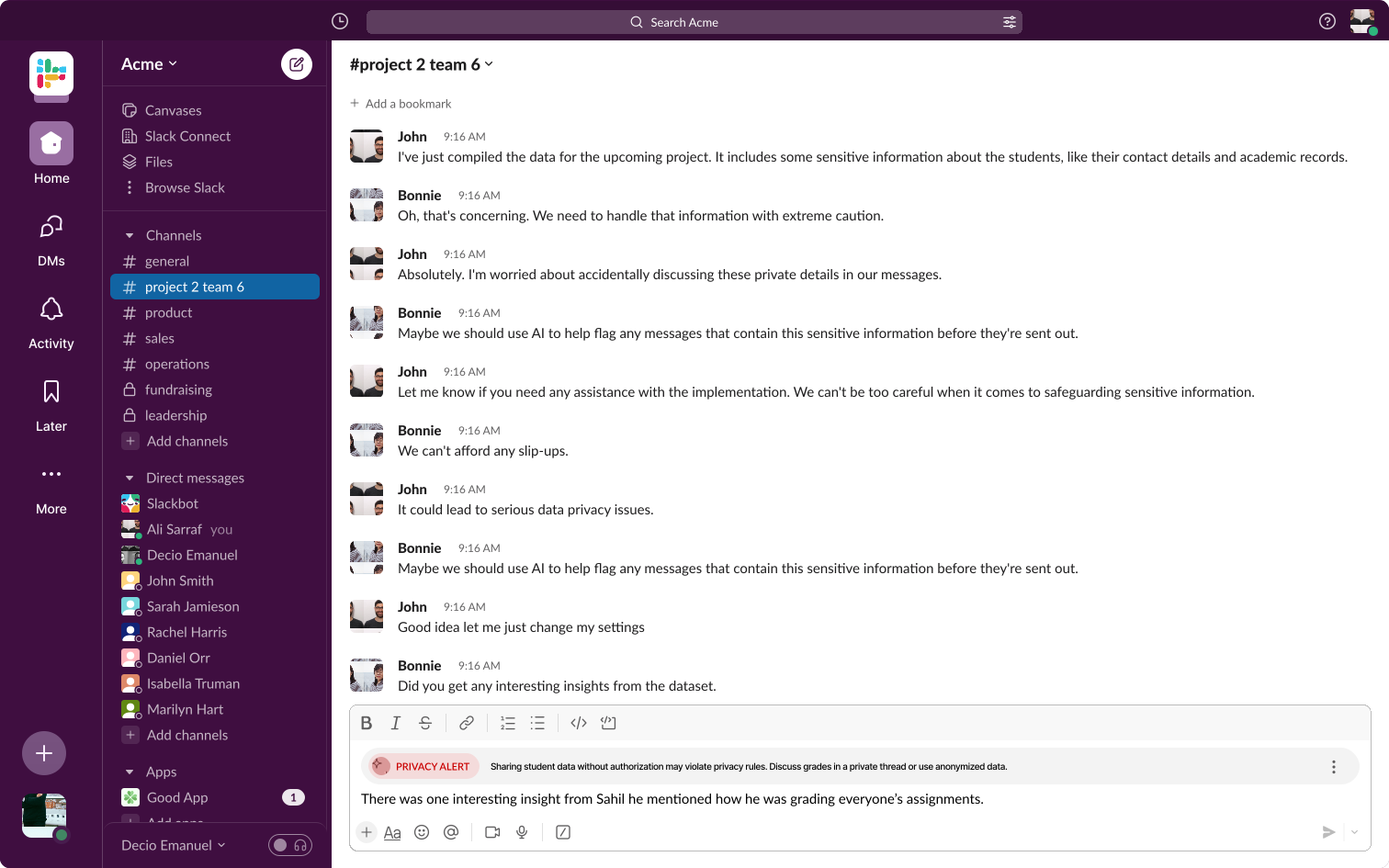
I translated the research into three product concepts and designed them within the existing Slack design system. Rather than introducing an entirely new interaction model, the goal was to make privacy, AI behavior, and user control visible within familiar Slack interactions.
01
Proactive privacy alerts
Surface privacy concerns while users are composing messages, giving them an opportunity to understand and act before AI moderation or processing occurs.
02
Transparent AI moderation
Explain why content is flagged and provide pathways for users to challenge or appeal AI decisions rather than treating moderation as an opaque system action.
03
Context-aware engagement settings
Give channels clearer control over expected communication styles so Slack AI can interpret professional, academic, and informal contexts more appropriately.
Impact
+40%
increase in measured trust score after usability testing and iteration on the final concepts.
Five usability tests were synthesized into three features for Slack AI, connecting the research findings directly to product concepts addressing transparency, privacy, and user control.
Full case study
Detailed process and research documentation available upon request.